Player Profile: Chris Downs – LHP, Cal Poly

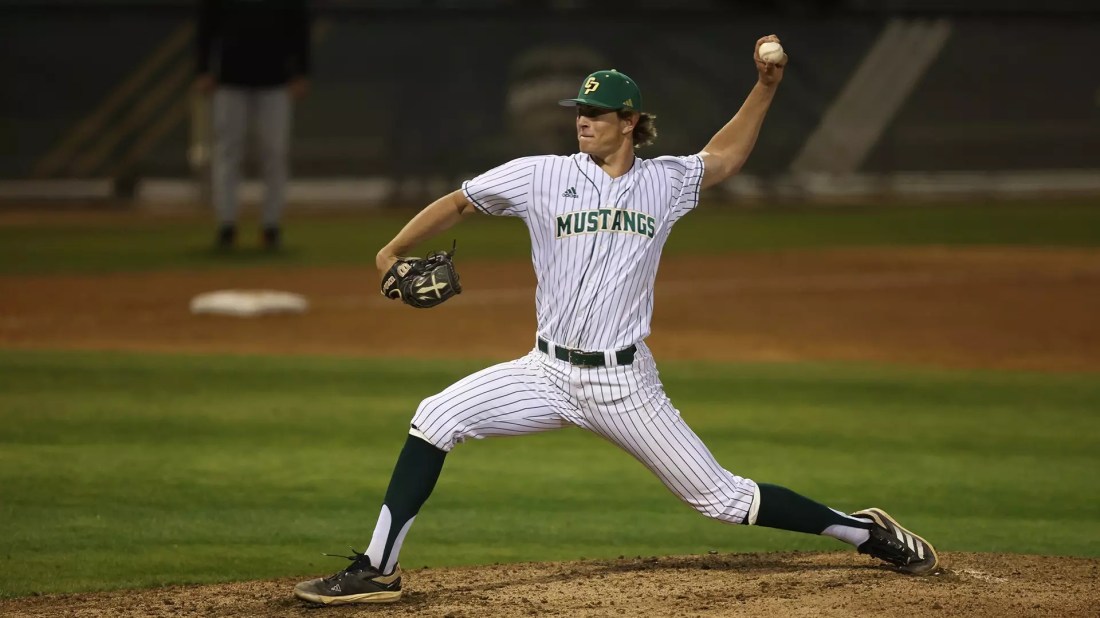
Chris Downs delivers a pitch in a white Cal Poly uniform.

The primary focus of this blog is evaluating Big West prospects, and some of them can be puzzling to assess. Cal Poly left-hander Christopher Downs is one such case – a 6’7″ southpaw who doesn’t light up the radar gun but offers an intriguing mix of size, extension, and feel for pitching. I wasn’t sure how to evaluate Downs at first. College-level “pitchability lefties” (finesse left-handers who rely on craft and command) often give me pause, yet Downs has just enough raw clay in his build and arsenal that it’s easy to imagine a pro team taking a gamble on him. His fastball only sits in the high-80s (87–89 mph), but with his towering frame and excellent down-mound extension, it plays faster. Meanwhile, he backs it up with a slider that generates swings-and-misses over 40% of the time and a changeup he can rely on to keep hitters off balance. In an era obsessed with velocity, Downs presents a bit of a throwback profile – and one that might just have pro scouts intrigued.

After a modest freshman year in 2024 (2-0, 6.65 ERA over 21⅔ innings), Downs made significant strides as a sophomore. He transitioned into a key bullpen arm for the Mustangs’ Big West championship team, where he posted a 4.09 ERA and a perfect 6-0 record across 25 appearances. Despite not making any starts, he often worked multiple innings in relief and even earned All-West Coast League honorable mention the previous summer with a 1.59 ERA in collegiate summer ball. By the end of 2025, he had become one of Cal Poly’s most reliable arms, and his Cape Cod League performance this summer (1.83 ERA with Yarmouth-Dennis) further solidified his upward trajectory. There’s a sense that Downs is just scratching the surface of what he could become. If he can build on his momentum with a strong spring, his name will be firmly on the radar when draft time comes around.

  • Height/Weight: 6’7″, 215 lbs
  • DOB: July 25, 2005
  • Bats/Throws: Right/Left

Player Profile

  • Build: Tall and long-limbed. Downs has an imposing 6’7” frame with a high waist. Though listed around 215–230 lbs, he is more lean than bulky, leaving room to add strength. His height gives him a natural downhill release angle, allowing him to throw on a tough plane to hitters.
  • Delivery: He stays tall throughout his motion and doesn’t sit deeply into his back leg. His stride is short-to-moderate for someone with his height, and instead of driving his back knee forward, he rotates around a firm front side. That keeps him upright and limits the power contribution from his lower half. Most of his velocity comes from torso rotation and arm speed, rather than a strong kinetic chain from the ground up.
  • Arm Action: Downs has a loose, whippy arm that comes through from a low three-quarters slot. The arm path is relatively compact in the back — he doesn’t have a long, sweeping arm swing — and he accelerates quickly through release. His hand pronates naturally after release, giving him some finish and helping sell his off-speed stuff.

Pitch Arsenal

Fastball: Downs’ fastball typically sits in the 86-89 mph range, topping out around 90 mph. While that velocity is not overwhelming, the pitch plays up thanks to his extension and angle. Coming from his 6’7” frame and whippy low-three-quarters release, the fastball gets on hitters with a downhill plane and some natural run. He spots the pitch well to both sides of the plate and isn’t afraid to challenge hitters inside. Given his height and long arms, hitters often have difficulty picking up the ball, helping the heater miss barrels even without premium velocity. If Downs can add a tick or two of velocity in the future (more on that below), his fastball could become a solid-average offering. As it stands, it’s an adequately effective pitch that he uses to set up his off-speed stuff.

Slider: The slider is Downs’ most dangerous weapon. Thrown in the upper-70s to low-80s, it’s a two-plane breaking ball that he tunnels well off his fastball. The slider has late bite, generating a lot of ugly swings. In fact, Downs’ slider produced a whiff rate north of 40%, making it a bona fide swing-and-miss pitch for him. He has confidence throwing it in any count – to back-foot it against righties or sweep it away from lefties – and it often functions as his putaway pitch. College hitters struggle to make contact with this slider once they are behind in the count. As he faces more advanced competition, the slider projects as at least an above-average offering that could miss bats at the pro level, especially if set up by improved fastball velocity.

Changeup: Downs also features a changeup in the high-70s, which has quietly been a very effective third offering. He maintains good arm speed on the changeup, helping sell it as a fastball before it fades away from right-handed batters. The pitch has mild sink and fade, and he typically uses it to keep righties off balance, often after showing them the fastball. While the changeup is not used as heavily as his slider, it has proven effective in eliciting weak contact and some swing-and-miss. He’s comfortable throwing the changeup for strikes and will use it in off-counts. It gives him a weapon to attack opposite-handed hitters, rounding out a solid three-pitch mix. Downs can throw his fastball, slider, and changeup all from the same arm slot, adding to his deception and making the changeup play well off his heater.

Mechanics and Deception

Mechanically, Chris Downs presents both strengths and opportunities for improvement. On the positive side, his delivery is relatively simple and repeatable. He has good balance and doesn’t have any glaring timing issues or violence in his motion. This has translated into good control (only 14 walks in 61.2 IP as a sophomore) and a consistent release point on all his pitches. Hitters have a tough time picking up the ball against him, in part due to the extension and the three-quarters slot creating unusual trajectories. However, the same tall, upright delivery that gives him angle is also leaving some velocity untapped.

Downs currently generates most of his power from his upper body, with limited contribution from his legs and hips. He remains very upright through his motion and doesn’t fully utilize the potential energy from his lower half. Pitching coaches often talk about taller pitchers needing to “learn to use their levers” – essentially, to better engage the glutes and drive off the back leg. In Downs’ case, improving his lower-half mechanics could unlock significant gains. Pro development staffs often focus on exactly this: teaching tall pitchers to sit into their backside and create more hip-shoulder separation during the stride. If Downs can learn to load his rear glute and drive more forcefully down the mound, it’s reasonable to expect his fastball velocity to tick up a couple of mph without sacrificing command. Indeed, Downs’ delivery currently looks like there is more in the tank – he has a loose arm and a big frame, so even a minor mechanical adjustment could lead to a jump from, say, 88 mph to 90–91 mph. It’s a positive sign that there’s still room for mechanical improvement in his game. Unlike a smaller pitcher who’s already maxed out, Downs has fixable areas in his delivery that, if addressed, could take his stuff to the next level.

In terms of deception, Downs benefits from his long limbs and low release point. He releases the ball closer to the plate than most college pitchers, which effectively makes his 87 mph fastball play faster in the batter’s box. Additionally, his ability to throw all of his pitches from the same arm slot adds an element of tunnel deception – hitters don’t get an early read on which pitch is coming. Downs does not employ any extreme gimmicks in his windup; it’s a fairly straightforward motion, but the extension and arm angle do the work of keeping hitters uncomfortable. If he can add that improved lower-half drive to his mechanics, he might also gain even more extension (and therefore deception), as his stride could lengthen and get him closer to home plate on release. All told, his current mechanics make him a strike-thrower with some funk, and potential tweaks could make him a late-blooming power lefty. It will be up to player development – either Cal Poly’s coaching staff in the short term or a professional organization down the line – to polish those mechanics for maximum output.

Outlook for 2026

Downs heads into his junior season in 2026 looking to cement himself as one of the Big West’s top pitchers. In 2025 he was used primarily as a multi-inning reliever and thrived in that role, often coming into games in the middle innings and shutting opponents down. However, Cal Poly might consider expanding his role moving forward. Late last season, Downs even showed he could handle a starter’s workload – most notably, in the Big West Tournament he threw a career-high 117 pitches over 6.1 innings in a win against UC Irvine. That outing demonstrated his endurance and effectiveness deep into games. Given that performance, the Mustangs’ coaching staff could be tempted to try him in the starting rotation in 2026, or at least use him in a similar fireman role where he regularly goes 3-5 innings at a time.

For Downs, the spring of 2026 will be a crucial window to boost his draft stock. He’s on the radar as a potential pro prospect, but to entice a team to draft him, he’ll want to show that any incremental velocity gains are sticking, that he can retire hitters multiple times through the order (if given starting opportunities), and that his swing-and-miss stuff plays consistently against high-level competition. If he can tick those boxes, some MLB team will likely be intrigued enough to take a gamble on his projection. College lefties with excellent feel but questionable velocity have historically been hit or miss in pro ball, which is why a strong junior year is vital for Downs. The good news is he’s trending in the right direction – his sophomore numbers and Cape League success already suggest a pitcher who is figuring things out. Another jump in performance (or stuff) in 2026 could solidify him as a draft-worthy prospect. And even if the fastball remains in the 80s, a continued track record of getting outs will make it easier for scouts to overlook the radar gun reading and bet on his combination of size, command, and secondary quality.

Projection

Chris Downs projects as a bit of a wild card, with a range of possible outcomes at the professional level. If things remain as they are – i.e. a high-80s fastball and good secondaries – he likely profiles as a crafty left-hander out of the bullpen. In that scenario, he could be a middle reliever or long-man who relies on mixing pitches and locating, somewhat in the mold of a situational lefty who can handle two innings at a time. However, if Downs can indeed find a few extra miles per hour and sharpen his mechanics, the ceiling rises. With a low-90s fastball to go along with his plus slider and solid changeup, Downs’ profile would resemble that of a back-end starter or swingman at the next level. His command of the zone and feel for pitching give him a solid foundation to build upon. It’s easy to see him carving out a role as a reliable innings-eater in pro ball if his stuff plays up just a bit more. On the optimistic side, you could dream on a 6’7” lefty who figures it all out and becomes a mid-rotation starter – but that would require significant development in velocity and consistency. More realistically, Downs’ likely future role is somewhere between a fifth starter and a multi-inning reliever, with his ultimate value hinging on whether that fastball can make the jump from fringy to average.

Ultimately, Downs is the type of prospect a team might gamble on in the middle-to-late rounds, hoping to unlock the remaining potential in his frame. He has already shown the pitchability, competitive mound presence, and ability to adapt to higher competition. If the velocity comes along, he could far exceed expectations. If not, his savvy and 6’7” angle could still give him a fighting chance to inch his way up the pro ladder as a matchup lefty. Downs has proven he can get outs with what he currently has; now it’s about proving he can get even better. In a sense, he’s exactly the kind of college arm that professional development staffs love to work with – big, coachable, with clear areas to refine. 2026 will go a long way in determining just how intriguing Chris Downs can be, but there’s enough raw material here that one shouldn’t bet against him making a name for himself at the next level.

FastballSliderChangeupCommandOverall
5055505550

Player Profile: Alejandro Garza – 3B/2B, Cal Poly

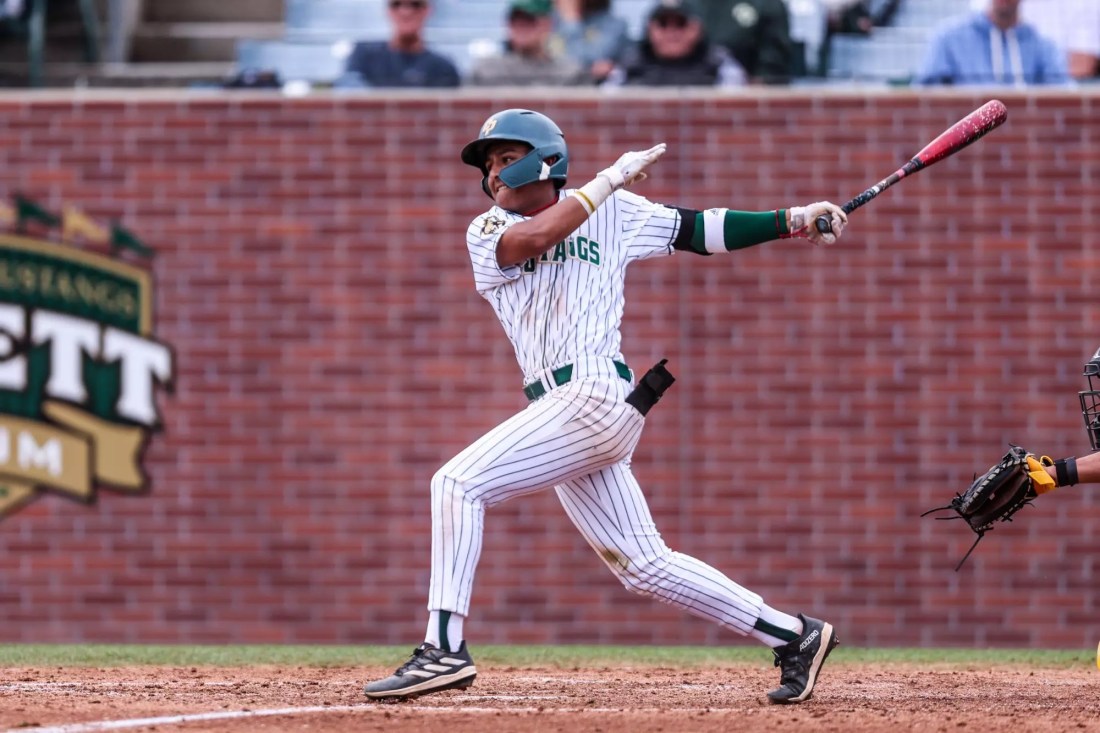
Alejandro Garza, wearing a white baseball uniform, follows through on a swing.
  • Height/Weight: 5’9”, 165 lbs
  • DOB: June 4, 2005
  • Bats/Throws: R/R

Alejandro Garza – affectionately nicknamed “Peanut” by teammates and fans for his smaller stature – has done nothing but hit since arriving at Cal Poly. In two seasons as the Mustangs’ everyday infielder, Garza has compiled a career .349 average and established himself as one of the toughest outs in college baseball. As a true freshman in 2024, Garza slashed .346/.388/.457, earned Big West Freshman Field Player of the Year honors and a first-team All-Big West selection. He struck out only 10 times all season in 235 plate appearances, an astounding display of contact ability that ranked him #2 in the nation in toughest-to-strike-out rate. He didn’t hit any home runs that year, but he sprayed 11 doubles and consistently came up with clutch hits. In 2025, Garza avoided any sophomore slump – in fact, he got even better. He was one of three Mustangs to start all 62 games and led the team with a .351 batting average. Over 262 at-bats he amassed 92 hits, 16 doubles, 6 home runs and 54 RBIs, slugging .481 and reaching base at a .408 clip. He also scored 57 runs to pace the offense. Importantly, Garza maintained his remarkable contact skills, punching out just 16 times all season. That equates to one strikeout every 16.4 at-bats, ranking him top-10 in the nation in toughest to strike out (9th nationally). He also drew 21 walks, so his BB/K ratio was positive (21:16) – rare for any hitter, let alone an underclassman. Along with teammate Ryan Fenn, Garza earned first-team All-Big West and second-team All-West Region honors for his phenomenal season. After firmly establishing himself as one of the Big West’s elite hitters, Garza took his talents to the Cape Cod League, joining Orleans for the summer. Despite facing strong pitching and wood bats, he continued to be a high-average bat, hitting .298 with a .357 OBP in 114 at-bats. He tallied 3 doubles, 1 homer and 16 RBIs for the Firebirds. True to form, he hardly struck out – only 12 Ks versus 11 walks all summer. Garza even proved his mettle by overcoming a mid-summer injury: a hit-by-pitch on the thumb that was expected to sideline him for two weeks, yet “Peanut” toughed it out and missed only seven days before returning to action, much to the admiration of coaches and teammates.

Garza’s offensive game is defined by exceptional contact ability and all-fields hitting. At 5’9” and 165 lbs, he is never going to be a pure power hitter, but he has a knack for hitting hard line drives from gap to gap. He utilizes a wide base in his stance, which gives him great balance and plate coverage. Garza can spoil pitcher’s pitches and rarely chases – that low strikeout rate reflects an advanced two-strike approach where he shortens up and puts the ball in play. Interestingly, as a sophomore he unlocked some power that wasn’t present in his freshman year – he went from 0 home runs in 2024 to 6 home runs in 2025. Those weren’t flukes either; many came from him turning on inside fastballs and driving them with surprising carry. He also racked up 16 doubles in 2025, showing that while he may be small, he can hit the ball with authority when he finds the barrel. Most of Garza’s hits are hard line drives middle-away – he’s very adept at letting the ball travel and lining pitches to right-center. That served him well on the Cape, where many of his base hits were opposite-field liners. Defensively, Garza is a steady and reliable infielder. He primarily mans third base for Cal Poly, but he’s also seen time at second base (he had a few starts at second as a freshman and could easily flip over there as needed). What he may lack in raw arm strength or range, he makes up for with sure hands, quick transfers, and a high baseball IQ. He made 32 multi-hit games in 2025 and also put together hitting streaks of 20 and 16 games, demonstrating consistency and the ability to adjust as pitchers try different tactics to get him out. By all accounts, Garza is also an excellent teammate and a gritty competitor – the kind of player who ignites a clubhouse with his energy and determination (the quick return from a painful HBP is evidence of that toughness).

Player Profile

Build: Small and compact. Listed at 5’9”, 165 lbs, Garza is shorter than the typical pro infield prospect, but he’s well-conditioned and strong for his size. He has a low center of gravity and a “spark plug” build – think Dustin Pedroia-esque. His stature earned him the nickname “Peanut,” but despite being undersized, he holds his own physically on the field.

Offensive Approach: Elite contact hitter with a line-drive, opposite-field approach. Garza sets up with a notably wide base and minimal stride, which keeps him very balanced through his swing. He tracks the ball extremely well and has quick, educated hands. With two strikes, he’ll shorten up and just try to put the ball in play, often fouling off tough pitches until he gets one he likes. He is comfortable hitting behind in the count and rarely gets himself out by chasing. Garza’s approach is to use the whole field – he loves shooting line drives into right-center and up the middle. Even on the Cape with high-level pitching, he stuck to this plan and hit just under .300, mostly with singles and a few doubles the other way. He doesn’t try to do too much; he knows his game and executes it.

Bat Speed & Impact: While not blessed with huge raw power, Garza has quick hands and excellent bat-to-ball skills. His bat speed is solid average, and because his swing path is so efficient, he can catch up to good velocity. The impact he generates is more pronounced than you’d expect from his frame – he can backspin balls into the gaps and occasionally will drive one out to left field when he really turns on it. In 2025 he “erupted” for six homers after having none the year before, indicating that as he gains experience and confidence, he’s learning which pitches he can elevate. Still, power is his least present tool; he’s more likely to hit 15+ doubles and a handful of homers than to ever be a double-digit home run guy consistently. His career slugging at Cal Poly (.445) is respectable and comes from his ability to square up a high volume of pitches. Every now and then, Garza will really flash unexpected pop – for example, he had 7 triples in a high school season and frequently drives balls over outfielders’ heads. Pitchers cannot sleep on him, or he will make them pay.

Defense & Athleticism: Garza is a fundamentally sound defender at both third base and second base. He’s not the fastest runner or the biggest arm on the field, but his defensive game is about reliability. At third, he has solid reactions and can handle hot shots well, using his body to knock down balls and his quick exchange to compensate for just average arm strength. He makes the routine plays very consistently and rarely boots grounders hit at him. When playing second, his range is adequate and he turns the double play smoothly. His arm from second is plenty strong (he pitched some in high school, indicating a decent arm). Overall, you’d grade his defense as average to slightly above – he’s not a plus-plus defender, but he’s sure-handed and heady, which is exactly what you want from an infielder. His toughness and competitiveness also shine through on defense; he’s the type who will dive for anything he can get to. Athletically, he’s more quick than fast, and his smaller frame gives him good agility. He’s durable too – played in every game in 2025 (62 starts) and even when banged up, he finds a way to contribute.

Base Running: High-IQ base runner who maximizes his tools. Garza’s pure speed is around average – he’s not going to steal a ton of bases (career 4-for-4 on steals in college), but he’s an efficient runner. Where he stands out is in taking extra bases and reading the game. He scored 57 runs in 62 games in 2025, leading the team, which speaks to his ability to get himself into scoring position and take advantage of opportunities. He goes first-to-third on singles when he can, and he’ll score from second on most base hits due to great anticipation and aggressive yet smart running. Essentially, Garza won’t be a big base-stealer at the next level, but he will not make mistakes on the bases and will find ways to advance opportunistically. His “motor” is always running – a reflection of his gritty playing style.

Projection

Garza is the quintessential “undersized overachiever” who has a chance to force his way into pro ball by virtue of his hit tool and makeup. At the collegiate level, he’s already a star – a two-time first-team All-Big West selection by age 20. Entering 2026, he will again be one of the conference’s top hitters and a leader for Cal Poly. For the professional projection, the obvious concern is size/strength and how that will translate against higher velocity and better breaking stuff. However, players with Garza’s hand-eye coordination and batting feel often find a way. He profiles as a high-contact, high-OBP infielder at the next level, perhaps similar to a David Eckstein or Tommy La Stella type of career path. He may never hit for much power in pro ball, but if he can hit .300 and rarely strike out, a team will find value in that. His likely role projection would be as a utility infielder who can provide a spark off the bench – someone you bring in knowing he’ll put the bat on the ball in a pinch-hit situation. Defensively, he can handle second and third, and with his arm and instincts, he could probably even spot at shortstop in a pinch (though his range might be stretched there). One thing working in Garza’s favor is that contact skills are at a premium in today’s game; his ability to avoid Ks and put pressure on defenses will stand out to scouts. He’ll need to continue showing extra-base ability (those 16 doubles and 6 homers in 2025 were very encouraging) so pitchers can’t just challenge him without fear. If he can demonstrate that the power threat is at least credible, his offensive profile becomes that much more viable. Intangibles-wise, Garza’s toughness and winning mentality will be a plus in evaluators’ eyes – he’s the kind of player who becomes a clubhouse favorite. In summary, Garza projects as a potential late-round draft pick or priority free agent who, if given the opportunity, could climb the ladder as a pesky contact hitter. His ceiling might be an everyday second baseman who hits for average and plays solid defense, while his floor is a high-performing minor leaguer who provides organizational depth and leadership. Don’t bet against “Peanut” – he’s made a habit of exceeding expectations at every level so far.

HitPowerRunFieldOvr
6040505045

Where Are the Big West’s 2024 Draftees Now?

Now that the 2025 MLB Draft has come and gone, it’s a perfect time to look back at last year’s Big West draftees and see how they’re faring in pro ball. One year after the draft, these former college standouts are scattered across the minor leagues – some thriving, some facing the challenges of pro competition. Below, I break down the progress of the 2024 draftees from each Big West school, including their minor league assignments and stat lines.

Cal Poly Mustangs

Jakob Wright (LHP, 4th Round, Los Angeles Dodgers): The Dodgers grabbed Cal Poly’s ace 128th overall, impressed by his strike-throwing and polish. Unfortunately, Wright’s pro career has started slowly due to injury. After signing late last summer, he made only a brief Complex League appearance and opened 2025 in Single-A. He was assigned to the Rancho Cucamonga Quakes (Low-A) but landed on the injured list in April 2025 before logging significant innings. As of now, Wright has yet to really debut in full-season ball. The Dodgers remain high on his upside – he showed plus command at Cal Poly – but fans will have to wait a bit longer to see those talents on display in the minors.

Ryan Stafford (C, 5th Round, Baltimore Orioles): One of the Big West’s best all-around catchers, Stafford earned Big West Defensive Player of the Year in 2024 and hit .368 with 46 RBI at Cal Poly. The Orioles picked him 160th overall, envisioning a defense-first backstop with offensive upside. Thus far, Stafford’s pro trajectory has been intriguing. He got off to a strong start in 2024 at Low-A Delmarva, batting .327 with a .444 OBP in 15 games and even stealing 9 bases. The Orioles challenged him with a promotion to High-A Aberdeen by season’s end, and that’s where he opened 2025. There, Stafford has faced tougher pitching – he’s hitting only .177 through roughly 75 games, with 0 home runs and 23 RBI. On the bright side, he continues to flash his athleticism, swiping 19 bases already in 2025, an unusually high total for a catcher. His plate discipline and contact skills will be areas to watch; the jump to High-A is testing his bat, but his strong defense and base-running make him a unique catching prospect in the Orioles system.

Steven Brooks (RHP, 11th Round, Boston Red Sox): A 6’6” right-hander from Cal Poly, Brooks was taken 327th overall by Boston after a solid college career as both a starter and reliever. The Red Sox limited his workload after signing in 2024, and he debuted in 2025 at Low-A Salem. Brooks has been working as a starting pitcher for Salem, where his performance has been up-and-down in the first half. In 14 starts, he’s 2-6 with a 6.08 ERA over 53.1 innings. He’s striking out roughly a batter per inning (51 K) but also carrying a 1.54 WHIP, indicating he’s allowing too many baserunners. Brooks is still adjusting to pro hitters – refining his command and secondary pitches will be key. The Red Sox like his frame and arm strength, so he’ll likely get ample time to develop in A-ball.

Jake Steels (OF, 18th Round, Atlanta Braves): A dynamic center fielder for the Mustangs, Steels fell to the 18th round despite hitting .381with 8 steals as Cal Poly’s leadoff man in 2024. The Braves saw a potential sparkplug and drafted him 551st overall. Steels’ transition to pro ball has been challenging offensively. After a brief 12-game stint in Low-A Augusta in late 2024 where he hit .231, Steels has spent 2025 between Augusta and High-A Rome. Across those stops, he’s appeared in 50 games, batting only .171 with 0 home runs. On the positive side, he’s shown a patient eye and has a few stolen bases, but his contact rate and power are currently underdeveloped. It’s not uncommon for later-round hitters to need time adjusting to pro pitching – Steels is only 22 and known for his work ethic, so the Braves will be patient. Fans at Augusta did get to see his game-changing speed and defense in center, even as his bat searches for consistency.

Cal State Bakersfield Roadrunners

Ryan Verdugo (RHP, 12th Round, Houston Astros): Verdugo made history as the first CSUB player ever drafted by the Astros when Houston grabbed him in the 12th round (373rd overall). A 6’2” righty who led the Roadrunners with a 2.72 ERA and 93 strikeouts in 2024, Verdugo unfortunately has not yet logged official innings in minor-league play. He signed in July 2024 but did not pitch in games last summer. He opened 2025 in Astros minor league camp and was assigned to the Low-A Fayetteville Woodpeckers roster to start the year. However, in early April the Astros moved him to the Florida Complex League (rookie level), and reports indicate he’s on the 60-day injured list. It appears Verdugo may be rehabbing from an injury (unconfirmed publicly), which has delayed his pro debut. When healthy, Verdugo features a lively fastball and a sharp slider that helped him dominate Big West hitters. The Astros are likely taking a cautious approach – once he’s recovered, he could move quickly as a college-tested arm.

Cal State Fullerton Titans

Christian “Rod” Rodriguez (RHP, 10th Round, Baltimore Orioles): In 2024, Rodriguez had a tough season (3-8, 5.45 ERA), but still showed flashes of dominance. The Orioles chose him in the 10th round (309th overall). Unfortunately, Rodriguez’s pro career is also off to a slow start due to injury. He pitched in eight games after signing last year, but was placed on the 60-day injured list in 2025. As of mid-2025, he has not yet made an appearance. Orioles fans shouldn’t forget about him, though – at 6’6” with a mid-90s fastball, Rodriguez has the arsenal to thrive if he can get healthy. We’ll likely see his debut pushed to 2026.

Andrew Morones (RHP, 16th Round, Kansas City Royals): A reliable reliever for the Titans, Morones was taken 467th overall by Kansas City. He impressed the Royals enough to jump to their Royals’ High-A Quad Cities squad in 2024, where he started this season, as well. However, his season hit a bump with an injury as well – he was sent on a rehab assignment to the complex league in May 2025. Prior to the injury, Morones’ stats were rough: an ERA above 5 in limited High-A innings, with control being an issue (nearly 5.5 walks per 9). When healthy, Morones is a bullpen arm with a low-90s fastball and slider – he’ll need to cut down the free passes to advance. The good news is he’s back throwing in Arizona; if all goes well, he could rejoin Quad Cities or Low-A Columbia later this year to continue his development.

Evan Yates (RHP, 20th Round, Baltimore Orioles): Yates’ story is a unique one. He missed the entire 2024 college season due to personal reasons, but shined in the MLB Draft League over the summer – that performance got him drafted in the 20th round by Baltimore. The Orioles were aggressive with Yates from the start. He actually made his pro debut at High-A Aberdeen late in 2024, tossing two scoreless innings in his first outing. In 2025, Baltimore opted to have Yates start games in Low-A Delmarva to build up innings. He has taken to the starting role quite well. In his season debut for Delmarva’s home opener, Yates threw 4.0 shutout innings with 8 strikeouts and 0 walks. He features a low-90s fastball with movement and a sharp curve, and importantly, he’s shown the ability to throw strikes consistently after that year off. Given his age, don’t be surprised if the O’s bump him back up to High-A later this year.

Long Beach State Dirtbags

Mike Villani (RHP, 13th Round, Los Angeles Dodgers → Cincinnati Reds): Villani, LBSU’s fireballing closer, was picked in the 13th round by the Dodgers after notching 10 saves and a 3.24 ERA in 2024 at Long Beach. His pro career took an unexpected turn in May 2025, when the Cincinnati Reds acquired Villani from the Dodgers in a high-profile trade that sent MLB closer Alexis Díaz to LA. Why would the Reds target a newly minted minor leaguer like Villani? In two brief Rookie-ball appearances for the Dodgers, Villani was perfect (2 innings, 0 baserunners, 5 strikeouts). That, combined with his college track record, convinced Cincinnati he could be a fast riser in the bullpen. Now in the Reds system, Villani has been assigned to their High-A affiliate (Dayton Dragons) as a reliever. He’s only just begun his Reds tenure, but scouts love his mid-90s sinker and competitive mound presence. Keep an eye on him as a possible fast-track bullpen arm; the Reds clearly believe in his upside.

UC Irvine Anteaters

Caden Kendle (OF, 5th Round, Minnesota Twins): Kendle was a two-time All-Big West First Teamer. After being drafted in the 5th round (159th overall), he played briefly at Low-A Fort Myers in 2024, batting .284 in 22 games. The Twins pushed Kendle to High-A Cedar Rapids in 2025, and he’s been a steady contributor. In 69 games with the Kernels, Kendle is hitting .253 with 6 home runs, 32 RBI, 17 doubles, and 11 stolen bases. Notably, he is showing good plate discipline, and he’s slugging .430 – showing some of the gap power he had in college. Kendle’s well-rounded offensive game (contact, a bit of pop, and speed) has translated nicely so far. He’s also an excellent defensive outfielder, and reports from Cedar Rapids praise his leadership and professionalism. If he continues at this pace, Kendle could see Double-A by early next year.

Woody Hadeen (SS, 6th Round, Detroit Tigers): Hadeen had a breakout 2024 at UCI, hitting .358 and scoring 82 runs as a speedy shortstop. The Tigers selected him in the 6th round (176th overall). Thus far in pro ball, Hadeen’s elite speed and contact skills have been intermittently on display. After debuting in Low-A Lakeland last year, he jumped to High-A West Michigan to begin 2025. It’s been a bit of a struggle at the plate – through roughly 30+ games, Hadeen is batting in the low-.200s (early in the year he was around .121, though he’s improved since). He hasn’t hit any home runs yet and has a handful of RBI. On the plus side, he continues to draw walks (his OBP was near .293 even when his average was .121) and has stolen a few bases. Defensively, Hadeen’s range and glove work have drawn praise, and Detroit is giving him time as an everyday shortstop in High-A. The Tigers are betting that Hadeen’s contact/on-base skills will come around with more reps; when they do, his speed (12 steals in 2024 for UCI) and defense could make him a true top-of-the-lineup sparkplug.

Myles Smith (OF, 7th Round, Cincinnati Reds): Smith was the 2024 Big West Field Player of the Year, after hitting a scorching .401 with a 1.170 OPS at UCI. The Reds nabbed him in Round 7 (209th overall). Smith’s pro career, however, has started on a rough note offensively. He has split this year between Low-A Daytona and High-A Dayton. In total, Myles Smith has around 168 at-bats in pro ball and is hitting just .149 with 2 home runs and 15 RBI. That is a stark contrast to his collegiate domination. Smith will look to regain the confident approach that made him a fearsome hitter in college. Given his talent, a second-half bounce-back is possible once he adjusts to professional breaking balls.

Dub Gleed (3B, 9th Round, Miami Marlins): Gleed battled some injuries at UCI but hit .351 when healthy in 2024, enticing the Marlins to take him in the 9th round (274th overall). Miami started Gleed at Low-A Jupiter in late 2024, and interestingly gave him a one-game taste of Triple-A in May 2025 (likely to cover a roster gap). Primarily, though, he’s been with the Jupiter Hammerheads. Gleed’s batting average won’t wow you – he’s hit around .207 in A-ball – but his on-base skills have been excellent. In fact, Dub Gleed has posted a .356 OBP in Jupiter. Through his first 25 pro games, he had 16 hits and 17 walks, showing a mature approach. Overall, in 2025 Gleed’s slashing roughly .216/.393/.293 with a wOBA around .363, finding ways to contribute despite limited power so far. Gleed will aim to boost his contact moving forward. If he does, his versatility (he’s played 3B, 1B, and some 2B) and on-base ability could move him up the ladder quickly.

Nick Pinto (LHP, 19th Round, Chicago White Sox): A crafty lefty who was an All-Big West second-teamer, Pinto unfortunately has had a nightmare year health-wise. He debuted briefly at Low-A Kannapolis in 2024 but made only one appearance before elbow trouble struck. In May 2025, Pinto exited a game with an apparent arm injury, and shortly thereafter he was moved to the full-season injured list. The update out of Chicago was that he underwent Tommy John surgery, which will wipe out his 2025 season. It’s a tough break – Pinto had shown promise, and the White Sox were intrigued enough to draft him despite a heavy college workload. Before the injury, he had a reputation for pinpoint control and an above-average changeup. Now, Pinto will rehab with hopes of returning healthy in 2026. The bright side: many pitchers come back strong from TJ surgery, and Pinto will only be 24 next year with an opportunity to reset and begin his climb then.

UC San Diego Tritons

Ryan Forcucci (RHP, 3rd Round, Houston Astros): UCSD announced itself in the Big West by producing a 3rd-round pick in 2024 – Ryan Forcucci went #101 overall to Houston. This hard-throwing righty had first-round buzz before an elbow injury ended his college season early. The Astros still invested nearly $1M in him, believing in his upside. As expected, Forcucci has not pitched yet in pro ball while recovering from Tommy John surgery (which he underwent last June). The Astros have placed him on the 60-day IL and he’s been rehabbing all year. Reports say Forcucci’s recovery is going well – he’s on track for fall instructional league or spring 2026. Prior to injury, he showed a high-90s fastball and plus slider that made scouts drool. If he comes back healthy, Forcucci has the talent to rocket through the minors; the Astros are no doubt eagerly awaiting his debut. Patience is key, but keep him on your radar as a potential impact arm down the road.

Matt Halbach (3B/1B, 10th Round, Chicago Cubs): Halbach was a draft wildcard – he hit .408 in just 19 games for UCSD in 2024 (missing time with injury), but the Cubs loved the bat enough to take him in Round 10 (302nd overall). Halbach opened 2025 as the everyday third baseman for the Low-A Myrtle Beach Pelicans (Cubs affiliate). Through 68 games in 2025, Halbach is batting .226 with 6 home runs and 36 RBI. He’s also clubbed 1 doubles and shown flashes of the hitting ability that allowed him to slug .662 in college. At 6’3” and 215 lbs, Halbach has a projectable power bat – the Cubs have even tried him a bit at first base and left field to increase his versatility. One interesting note: Halbach got an opportunity to play in the Australian Baseball League this past winter, further honing his skills. If he can improve his contact rate, the power and run production will only increase. The Cubs system is stacked at the corners, but Halbach is quietly putting himself on the map as a prospect to watch.

UC Santa Barbara Gauchos

Matt Ager (RHP, 6th Round, Pittsburgh Pirates): Ager was a dominant closer in 2024 for UCSB (11 saves, All-Big West Second Team) after a stellar 2023 as a starter. The Pirates took him in the 6th round (174th overall), envisioning a versatile right-hander. In 2025, Ager began back at Bradenton, where his command has been less than stellar. In 54.0 innings, he’s allowed 52 hits, 30 walks, and 8 HBP – but he’s also struck out 34. When on the mound, Ager flashes a four-pitch mix, including a sinking fastball around 92-95 mph. If he gets healthy in the second half, Ager could move to High-A Greensboro and make up for lost time. He’s still a very intriguing arm (some in the org compare him to a young Trevor Williams type).

Ryan Gallagher (RHP, 6th Round, Chicago Cubs): Gallagher, the Big West Pitcher of the Year in 2024 (10-1, 2.22 ERA), has been on the fast track since the Cubs snagged him in Round 6 (182nd overall). Known for his polished changeup and pinpoint control, Gallagher has already risen to Double-A in just one year. He started 2025 in High-A South Bend and pitched well, striking out 85 batters in 72.2 innings and earning a mid-season promotion to the Tennessee Smokies (Double-A). Combined between the two levels, Gallagher’s numbers jump off the page: 4-6 record, 3.43 ERA, 84.0 innings, 96 strikeouts, only 1.07 WHIP in 16 starts. That WHIP and a K-rate above 10 K/9 show he’s missing bats and limiting baserunners with equal skill. The Cubs could be in line for a potential 2026 MLB debut if he continues this trajectory. Gallagher’s success is built on his advanced command – his walk rate is around 7%, very low for a first-year pitcher. It’s not far-fetched to say Gallagher has been the most successful Big West 2024 draftee so far. If you loved him at UCSB, you’ll be delighted to see him carving up minor-league hitters with that deadly changeup and poise on the mound.

Aaron Parker (C, 6th Round, Toronto Blue Jays): Parker was the Big West’s premier catcher in 2024, hitting .379 with 12 homers and showing a strong arm behind the plate. The Blue Jays picked him in the 6th round (187th overall), and he’s already proving to be a draft steal. Parker spent a short time in Low-A last year and moved up to High-A Vancouver for 2025. In 62 games for the Vancouver Canadians, Parker is batting .233 with 8 home runs, 65 RBI, and a .689 OPS. He did spend a brief stint on the injured list to start 2025, but since being activated, he’s been healthy and productive. With his stocky 5’9” frame and quick left-handed bat, Parker has drawn comparisons to former Blue Jays catcher Guillermo Quiroz as a solid all-around backstop.

Ivan Brethowr (OF, 7th Round, Chicago Cubs): Brethowr was a power-packed outfielder for UCSB, and the Cubs grabbed him in Round 7 (212th overall) as part of their Gaucho haul. Listed 6’6” and 250 lbs, Brethowr looks like a slugger and showed flashes with 28 homers over two college seasons. In pro ball, he’s been steadily adjusting. Brethowr spent 2024 in Low-A Myrtle Beach and is in High-A South Bend for 2025. So far in ’25, he’s hitting in the low-.220s with 4 home runs and 26 RBI through 82 games. He’s also stolen 23 bases, but his K-rate is around 26% at High-A. The encouraging sign is Brethowr’s plate discipline: he’s drawing walks at a healthy clip, leading to an OBP in the .390s despite a modest batting average. When he does connect, the ball flies – though officially he has just 4 homers, he’s hit a bunch of doubles and loud outs. Cubs development staff have worked with him to shorten his swing and use the whole field. Given his size and raw strength, patience is key. If the light turns on, Brethowr could start crushing Midwest League pitching. For now, he’s holding his own and contributing RBIs for South Bend, and the Cubs are content to let the 22-year-old refine his approach.

Zander Darby (3B/1B, 12th Round, San Francisco Giants): Darby was a senior sign who went in the 12th round (358th overall) to the Giants, and he’s been one of the surprise success stories among Big West draftees. In his first full pro season with the Low-A San Jose Giants, Darby has been raking. As of mid-2025, he’s slashing .295/.406/.466 with 5 home runs and 50 RBI in 57 games. He’s collected 57 hits in 193 at-bats, showing both contact and some pop, and even added ten stolen bases. That performance is in line with the hot streak he ended his college career on – Darby caught fire in May 2024 for UCSB and has carried it forward. The Giants have primarily played him at third base, though he saw time at first in college. What’s notable is Darby’s advanced plate approach; at 23, he was a bit old for Low-A, so his success needs that context, but he’s doing exactly what you’d hope an older draftee would do – lead the team in RBI and hit near .300. He may be due for a promotion to High-A Eugene in the second half. Giants fans, remember the name – Zander Darby could move quickly if he keeps hitting like this.

Brendan Durfee (C/1B, 14th Round, San Diego Padres): Durfee was a one-year wonder at UCSB after transferring from Division III – he hit 9 homers with a 1.020 OPS as a senior, leading the Gauchos in slugging. The Padres drafted him in the 14th round (420th overall), intrigued by his lefty power and versatility. Durfee had a strong debut at Low-A Lake Elsinore in late 2024, hitting .288 with 2 homers and 18 RBI in 20 games. That earned him a promotion to High-A Fort Wayne to start 2025. In Fort Wayne, Durfee has found it a bit tougher sledding – in 66 games, he’s batting .222 with 2 homers and 21 RBI. He has 12 doubles, so the extra-base hit ability is still there, but his strikeout rate has climbed facing better pitching. He’s splitting time at catcher and first base in High-A. The rigors of catching full-season ball can sometimes affect offensive output, which may be a factor in his modest stats. San Diego is generally aggressive with college hitters, so despite the .222 average, they’ll likely keep Durfee moving forward – especially given his excellent first impression last year. If he can adjust to High-A pitching in the late summer, he might tap back into that power we saw in college (he’s capable of a late-season homer surge). At worst, Durfee projects as a versatile organizational player; at best, maybe he becomes a lefty power bat who can catch – which has definite value.

Cal State Northridge

Kevin Fitzer (16th Round, Colorado Rockies): Kevin Fitzer, a standout at Cal State Northridge, is the Matadors’ 106th draftee in program history. Selected 468th overall by the Colorado Rockies in the 16th round, Fitzer capped a four-year college career batting .328 with 19 home runs, 102 RBI, and a 1.060 OPS in 2024. He earned All‑Big West Honorable Mention, led CSUN in doubles (13) and stolen bases (11), and became the first Matador in 22 years to win back‑to‑back Field Player of the Week honors.

As of mid‑2025, Fitzer is slashing .240/.326/.333 (.659 OPS) over 288 at‑bats in Low‑A with the Fresno Grizzlies, Colorado’s affiliate in the California League. He’s driven in 34 runs, hit 3 homers, and stolen 5 bases—a solid first full pro season. His month-by-month splits show clear improvement: after a slow April (.127 AVG), he turned it around with a .311 average in June and strong performances in May as well. Fitzer has already collected multiple multi-hit and multi‑RBI games (including a first‑career pro walk‑off on June 29 vs. Stockton).

At 6’2″, 200 lbs, Fitzer offers a balanced right‑handed profile—moderate power, gap-to-gap doubles, plus plate discipline (.326 OBP) and occasional speed. He primarily plays first base but has seen time in left field and even at designated hitter. Defensively, scouts note his smooth glove actions and consistent arm accuracy, which align with his experience at multiple positions in college. The Rockies are giving him steady reps every day to let him refine his swing and in-game awareness at full‑season ball.

Conclusion

Many of these players were cornerstone pieces of their college teams and are now translating those skills to the next level. Who will be the first from this group to reach “The Show”? Gallagher might be a good bet for 2026 given his torrid start, but don’t sleep on others like Parker (catchers who can hit move fast) and maybe a healthy Forcucci down the line. And of course, the story is still being written – player development is a marathon, not a sprint.

For college baseball fans, it’s rewarding to track these players you cheered for in Big West action now chasing their big-league dreams. We’ll be rooting for all of them to climb the ladder. One year down, many more to go – and perhaps the next Tanner Bibee or Shane Bieber (both Big West products) is in this 2024 cohort, on the path to MLB stardom.