What We All Got Wrong About the Anteaters

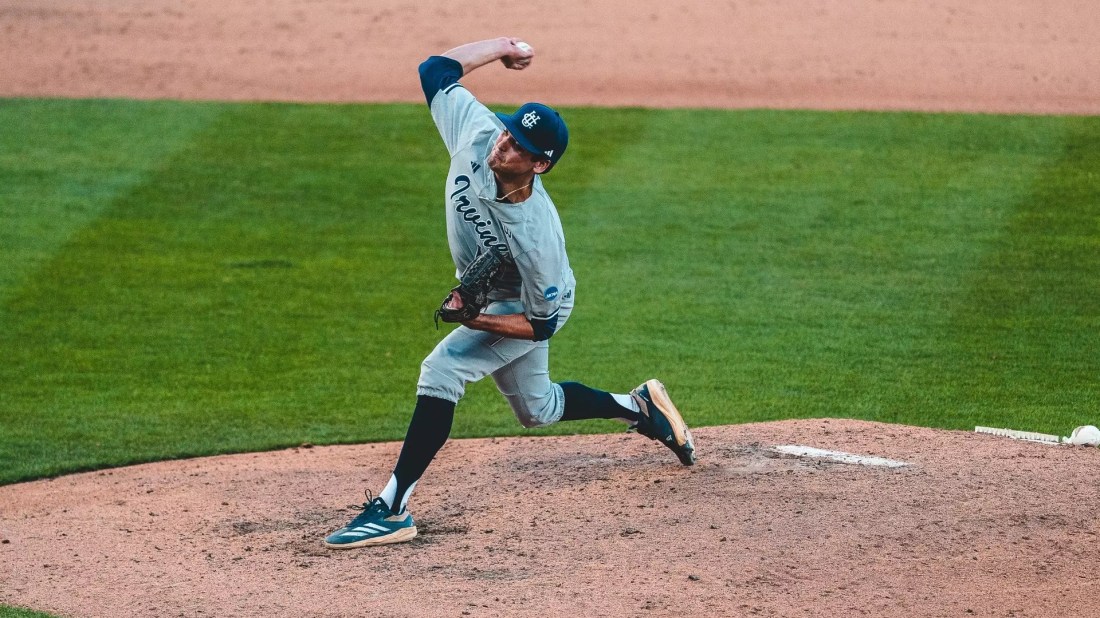
You could be forgiven for expecting big things from UC Irvine’s baseball team on March 1st of 2026. Fresh off the heels of their 2025 NCAA Regionals appearance, they got off to an 8-3 start and took down two ranked opponents – #22 Vanderbilt and #24 Oregon – in the same weekend at the Live Like Lou Las Vegas Classic.

But how swiftly things change in college baseball.

Since that weekend, where the Anteaters faithful were riding high, the team has gone 1–11 since, including a sweep at the hands of rival Cal State Fullerton, with their only victory a come-from-behind 4–2 win over CSUN at home.

Entering play this weekend’s series at Long Beach State, Ben Orloff’s squad has an overall 9-15 record, including going 1-5 in conference play thus far, which has me asking the question: did the team really change, or did we just misread what we saw?

Of course, February and March are no stranger to surprises. It isn’t unusual to see a team get off to a hot start and fade as the calendar pages flip. With UC Irvine, it felt less like a surprise and more like a continuation of their success: There was a baseline belief. Here was a solid program, coming off of a strong year, with a good incoming transfer class headlined by centerfielder Tommy Farmer.

Their early record reinforced, rather than challenged, prevailing beliefs. The ranked wins didn’t shock – they validated.

So, then, what changed?

Surely, something broke. The team regressed. The early read must have been wrong. Right? Not so fast.

Much more likely is that, in economics terms, we were reacting to the Anteaters’ February not in the context of their overall talent level, but rather as confirmation bias: We don’t just react to new data; we react more strongly when that data confirms what we already believe.

The regional appearance? That’s prior data. The 8-3 start? That’s reinforcement. The ranked wins? Confirmation spike. 1-11 since? Correction.

The truth is, UC Irvine is probably no more an .083 winning percentage team than they were a .727 winning percentage team, but rather somewhere in the middle. At season’s end, the 1-11 stretches count just as much as the 8-3 stretches. Good teams just hope there’s a few more of the latter than of the former.

Not all results are equally informative, but we treat them like they are. When a good stretch of play comes early in the season, that’s confirmation that last year was not a fluke. When a team gets two loud, visible wins on a national stage, that feels like validation.

But twelve quieter, more informative games can slip by unnoticed.

That’s classic signal versus noise: We overweight high-visibility results and underweight accumulated evidence. The accumulated evidence suggests that the Anteaters are not currently an 8-3 team or a 1-11 team, but rather a 9-14 team. A couple of bounces this way or that, and a 9-14 team looks like a 14-9 team.

To quote one of my least-favorite adages, that’s why they play the games.

This is why it’s so important to observe teams live and in-person before making a judgement on their true talent ability. Like most things in baseball, loathe as we often are to admit it, it’s usually a product of luck and sequencing. There really are not two versions of the UC Irvine Anteaters baseball team, but one – and that one is capable of winning every game they enter. They are just as capable of beating the #22 team in the country as they are to getting swept by Cal State Fullerton.

What looks like a collapse is actually more like a correction. Perception rose quickly and now it’s adjusting downward. Recalibrating, to borrow a market term.

The team itself has not moved nearly as much as that perception has.

College baseball amplifies this because the structure of the sport makes misreads quite likely. The schedule happens in quick bursts: A three-game series concentrates outcomes. Each team will face an opponent only once in a season, and how they perform in any given series is easy to overweight.

None of this is unique to UC Irvine. Early-season narratives across the sport follow this pattern. There’s a reason “on-pace guys” have become a meme, but it goes beyond individual stats. Rankings volatility, conference perception, reactions to non-conference wins and losses. It’s easy to over- or underweight data.

To my eyes, the 2026 version of UC Irvine’s baseball team is a very strong squad. The offense still carries some holdovers from the previous season, but a lot of players are still finding their everyday roles. As much as we may want certainty, and as much as we may mistake confirmation for truth, the fact is that the book is yet to be written on this team.

The next time a single weekend “proves” something, it’s worth it to remain skeptical. To get eyes on a team; on a player, rather than to react aggressively and spend weeks correcting. After all, by the time the narrative peaks, the correction is often already underway.

New to Big West Baseball? Start Here.

Welcome to Big West Baseball

If you’ve just discovered Big West Dugout, welcome to my little corner of the college baseball universe. The Big West Conference is a Division I league headquartered in California and consisting of public universities on the West Coast. Ten of the 11 current members are in California and one is in Hawaiʻi, so the rivalries are regional and intense. The conference dates back to 1969, and while it no longer sponsors football, baseball remains one of its crown‐jewel sports.

Big West baseball is scrappy and competitive. The programs often recruit locally and develop players overlooked by larger conferences. Many of those players eventually reach the pros; at least a dozen former Big West players were on MLB Opening Day rosters in 2025, and UC Santa Barbara pitcher Tyler Bremner went second overall in the 2025 MLB Draft.

2025 Season Snapshot

The 2025 season showcased how balanced the Big West can be. UC Irvine captured the regular‑season title with a 24–6 conference record, but Cal Poly stormed through the postseason to claim the conference tournament. The table below summarizes each team’s conference record and a quick highlight.

Team2025 Big West record*Note
UC Irvine24–6 (43–17 overall)Regular‑season champions
Cal Poly23–7 (43–19 overall)2025 Big West tournament champions
Cal State Fullerton19–11 (29–27 overall)Four national championships (1979, 1984, 1995, 2004) and 18 College World Series appearances
UC Santa Barbara16–14 (36–18 overall)Tyler Bremner drafted No. 2 overall in 2025
Hawaiʻi16–14 (35–21 overall)Competitive program from the islands
UC San Diego15–15 (26–25 overall)Successful D-II program which joined D-I in 2021
Long Beach State15–15 (22–31 overall)The “Dirtbags” nickname reflects a gritty, hard‑nosed style
UC Davis13–17 (27–28 overall)Alumni like Daniel Descalso and analytics pioneer Sig Mejdal now work as MLB coaches and executives
CSUN (Cal State Northridge)10–20 (15–34 overall)Has produced 17 MLB players, including 2025 All‑Star pitcher Joe Ryan
Cal State Bakersfield9–21 (18–38 overall)A young program (founded in 2009)
UC Riverside5–25 (16–36 overall)Division II national championships in 1977 and 1982

*Conference record shown first; overall record in parentheses.

Big West Playoff & NCAA Tournament Format

Big West Championship – Starting in 2025, the conference revived its postseason tournament after a 27‑year hiatus. The top five teams from the regular season qualify. Seeds No. 4 and No. 5 play a single‑elimination “play‑in” game; the winner joins seeds 1–3 in a four‑team, double‑elimination bracket. The champion earns the Big West title and an automatic berth in the NCAA tournament. This format continues in 2026: The tournament will be held at UC Irvine’s Anteater Ballpark and again features a play‑in game followed by a double‑elimination bracket.

Path to Omaha – Winning the Big West championship guarantees a spot in the NCAA Division I Baseball Tournament, but other high‑performing Big West teams can receive at‑large bids. The NCAA tournament features 64 teams. Regionals are hosted at 16 sites with four‑team double‑elimination brackets. Regional winners advance to Super Regionals, which are best‑of‑three series. The eight Super Regional winners move on to the Men’s College World Series in Omaha, where two double‑elimination brackets determine the finalists. The winners of those brackets play a best‑of‑three series for the national title. Because the NCAA postseason alternates between double‑elimination brackets and best‑of‑three series, a team can lose multiple games yet still win it all.

Why Big West Dugout?

Big West Dugout is a fan‑powered blog created by someone who loves this game and the incredible players and teams in the Big West, with no insider credentials. The goal is to shine a light on hardworking athletes and competitive programs through player spotlights, team analysis and draft‑prospect breakdowns.

Here’s what you’ll find:

  • Team pages: Each of the 11 schools has its own section with trend pieces, weekend notes and player spotlights. Use the Teams menu to explore.
  • Draft coverage and player profiles: Scouting reports on draft prospects, updates on former Big West players in the minors, and deep dives into rising stars (e.g., our coverage of the 2024 draftees).
  • Conference news: Updates on standings, awards and postseason tournaments. This includes big stories and features on Big West alumni in MLB.

Everything is written from the bleachers, not the press box. The tone is informal and honest – a blend of stats, scouting and fandom.

Big West in the Pros

The Big West has a proud tradition of producing professional talent. At least twelve former Big West players were on 2025 MLB Opening Day rosters, with Cal State Fullerton leading all programs with four players. Notable alumni include Jarren Duran (Long Beach State), Shane Bieber (UC Santa Barbara), Brooks Lee and Drew Thorpe (Cal Poly). Managers Brandon Hyde (Baltimore Orioles) and Mark Kotsay (Oakland A’s) also hail from the conference. The 2025 draft further showcased Big West talent: UC Santa Barbara’s Tyler Bremner was taken second overall after dominating college hitters with a 2.54 ERA and 104 strikeouts in 2024.

Suggested Reading

To get started, here are a few representative posts:

You can find these on the homepage or via the Player Profiles and Draft Coverage categories.

Get Involved

Comment on posts, share your own observations, or suggest players to watch. Follow Big West Dugout on social media and subscribe to get emails when new posts go live. Whether you’re a die‑hard fan, a parent of a player, or just curious about West Coast college baseball, this site is your dugout.